 EN
EN  English
 中文简体
中文简体 Español
 عربى
عربىNews
Home / News / Industry News / How to Use an Electric Fly Swatter: Step-by-Step Instructions and Safety Rules

Content
The fly lands on the kitchen counter, and you reach for the electric swatter. The impulse is to swing immediately, but the correct way to use an electric fly swatter is actually a short sequence: charge the unit first, keep the grid off until you are close, press the trigger, make one controlled swat, and release the button. If you skip the prep or press too early, you can miss the insect, drain the battery, or create a careless shock risk for yourself or someone nearby.
An electric fly swatter has a metal grid with two sets of wires: one set carries the current from the battery, and the other acts as the return path. When an insect flies into the grid, its body bridges the gap between two wires, the current passes through, and the insect is killed or stunned. The shock is strong enough to handle small flying pests, but it is not a constant arc. The grid only energizes for as long as you hold the activation trigger, which is why timing matters more than muscle.
This also means the swatter is safer than a wall-mounted bug zapper. You can turn it off instantly, and you control where it swings. The main task is not to use it like a traditional plastic fly swatter, but to approach the insect calmly and let the active grid do the work.
Every swatter depends on its power source. A plug-in lead-acid model with 400 mAh needs a full charge before the first use, especially if it has been in storage. A USB lithium model with 500 mAh or 1200 mAh can use a phone adapter or laptop port, and a AAA battery model is useful when no wall outlet or USB port is available.
For a home unit with a figure-eight cable and a 400 mAh lead-acid battery, the FF987A is a straightforward example of an indoor-ready model. You can charge it, store it on a wall hook, and keep it within reach.
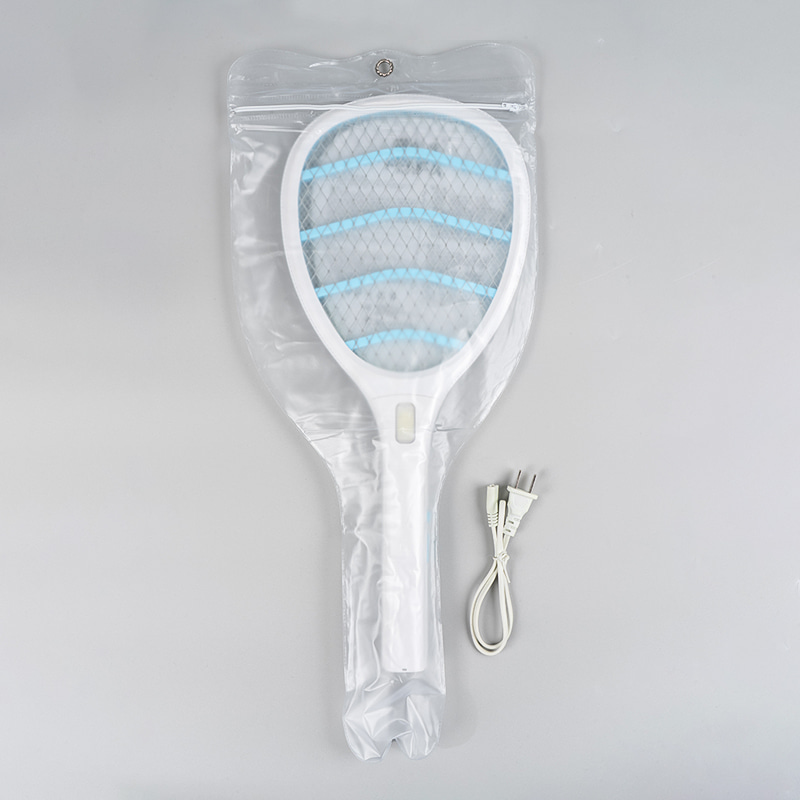 FF-987A Electric Mosquito Swatter with 400mAh Battery and LED LightA practical indoor model with a figure-eight cable and lead-acid battery, featuring an LED light for low-light use. Its dual-color design adds a modern touch to home mosquito control.View Product →
If you want USB charging and a foldable frame, the FF881 combines a lithium battery with a display screen. This type is useful for trips, balconies, or rooms where you want to check the battery status before relying on it.
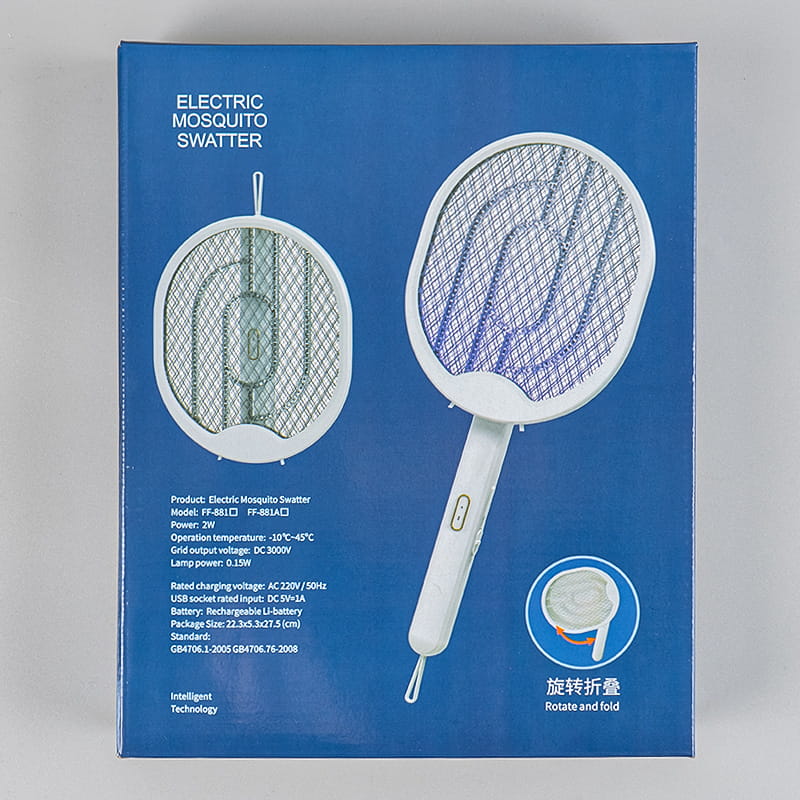 FF-881 Foldable USB Rechargeable Mosquito Swatter with DisplayThis foldable swatter offers USB charging and a display screen for battery status, making it convenient for travel or balcony use where you want to monitor power levels before use.View Product →
Follow the sequence below for the first use and repeat it until it becomes automatic.
If the insect is still moving after a single swat, give it a moment, then press the trigger again. If it remains alive, the most common reason is a weak battery or a dirty grid. Charge the unit, clean the grid, and try again.
In a garden or balcony, the same steps apply, but avoid rain and high humidity. The grid can short out if water leaks inside. If you are using it at dusk, choose a model with an LED light so you can see the insect before you swing.
Battery care depends on chemistry. Lead-acid models need a full charge after use; if the unit sits for months, the battery may lose capacity. Lithium USB models tolerate partial charging better, but you should still keep them dry and out of direct sun. AAA battery models are simple: replace the batteries when the shock feels weak.
To clean the grid, make sure the unit is off and unplugged. Use a soft brush or a dry cloth. Do not rinse the head under water. If the frame gets dirty, wipe it with a slightly damp cloth and dry it before the next use.
Below is a quick way to think about the differences before you choose a swatter.
| Power source | What it means in practice | Best use |
|---|---|---|
| Lead-acid with plug or figure-eight wire | Needs a wall outlet, so the swatter is best stored near a socket. | Home kitchens, porches, and bedrooms with a fixed place for charging. |
| Lithium with USB or base | Charges from a laptop, phone adapter, or power bank; often lighter. | Apartments, travel, camping, and balcony use. |
| AAA battery | No charging step, but you need spare batteries. | Emergency use or locations without a reliable outlet. |
After each use, turn the unit off, remove any debris from the grid, and put it back in a dry spot. Check the battery level every few weeks. Do not leave a lead-acid swatter on the charger for months without checking it. If the shock weakens, the problem is usually a battery, not the grid.
If you are still deciding between a basic plug-in model and a USB lithium model, the buying tips in this guide to electric mosquito swatter buying decisions can help you match a model to your household. The core technique is the same: charge it, approach quietly, press once, and clean the grid.
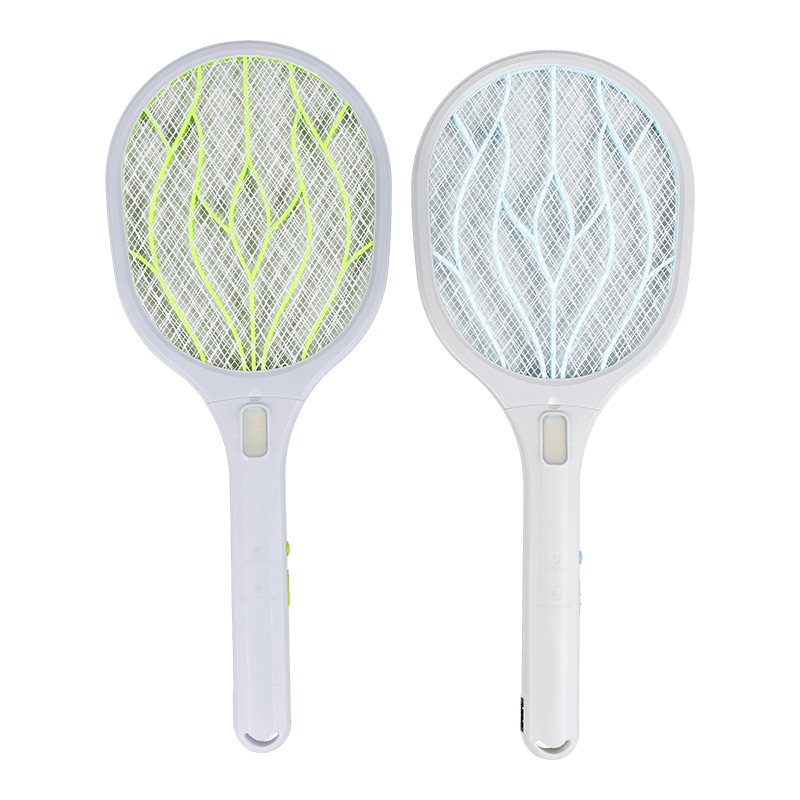 FF-988A 400mAh Portable Electric Mosquito Swatter with Light and Figure-Eight Cord
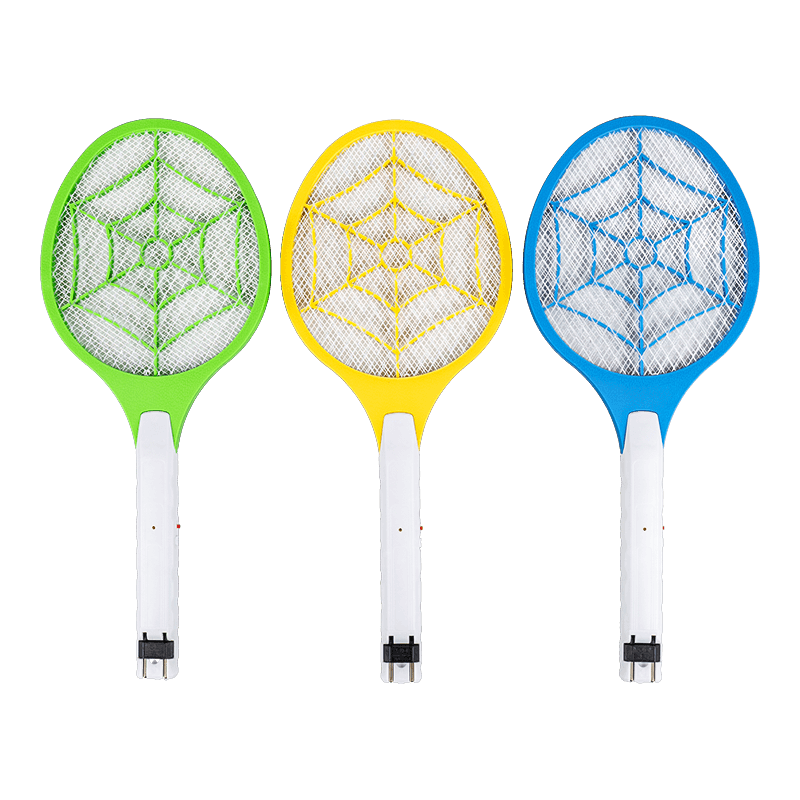 FF-007 3-Color Brazilian Plug Lead-Acid Battery 400mAh Electric Mosquito Swatter
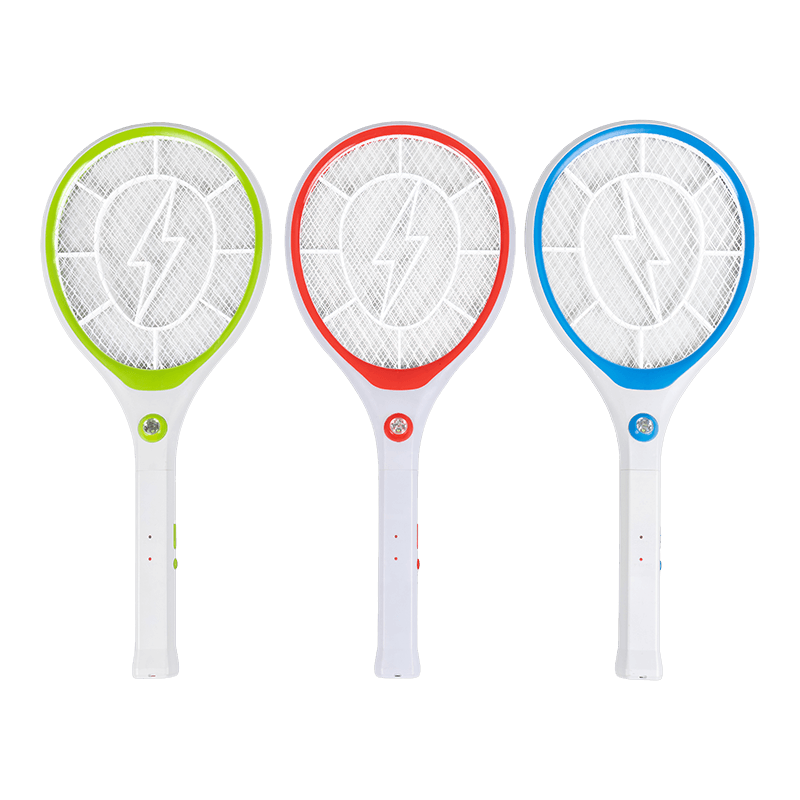 FF-787A 3-Color LED Solar with Plug Lead-Acid Battery 400mAh Electric Mosquito Swatter
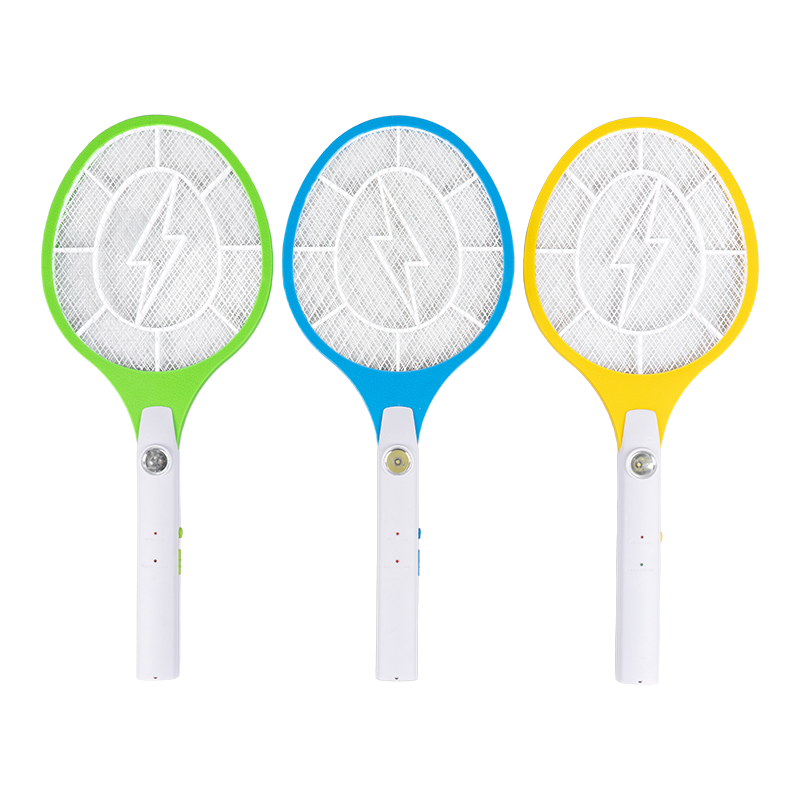 FF-009 LED Lead-Acid Battery 400mAh with Plug Electric Mosquito Swatter
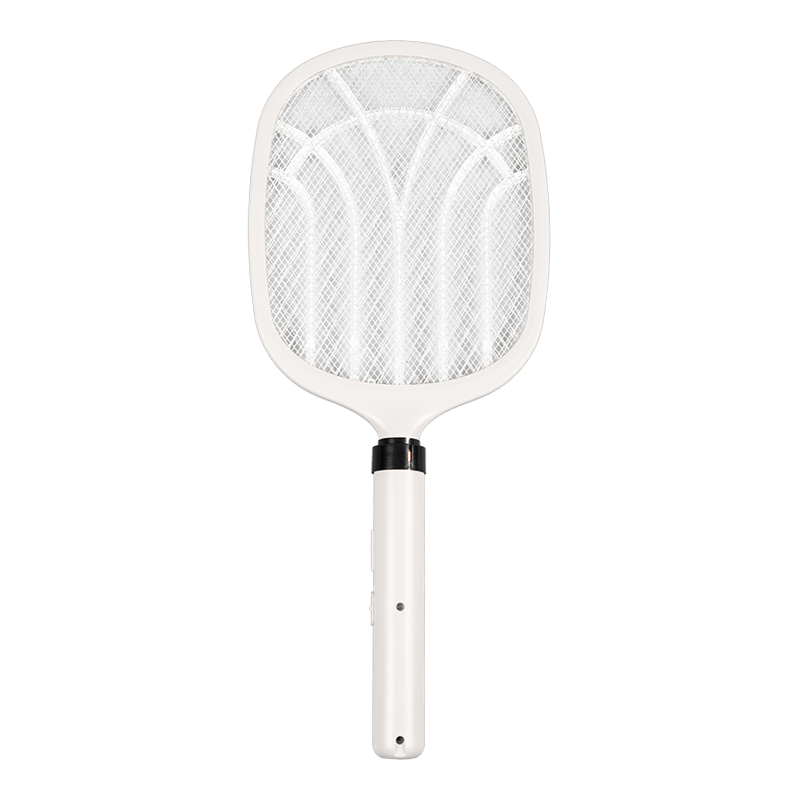 FF-883 1200mAh Embroidered Pattern Lamp USB Base Rechargeable Electric Mosquito Swatter
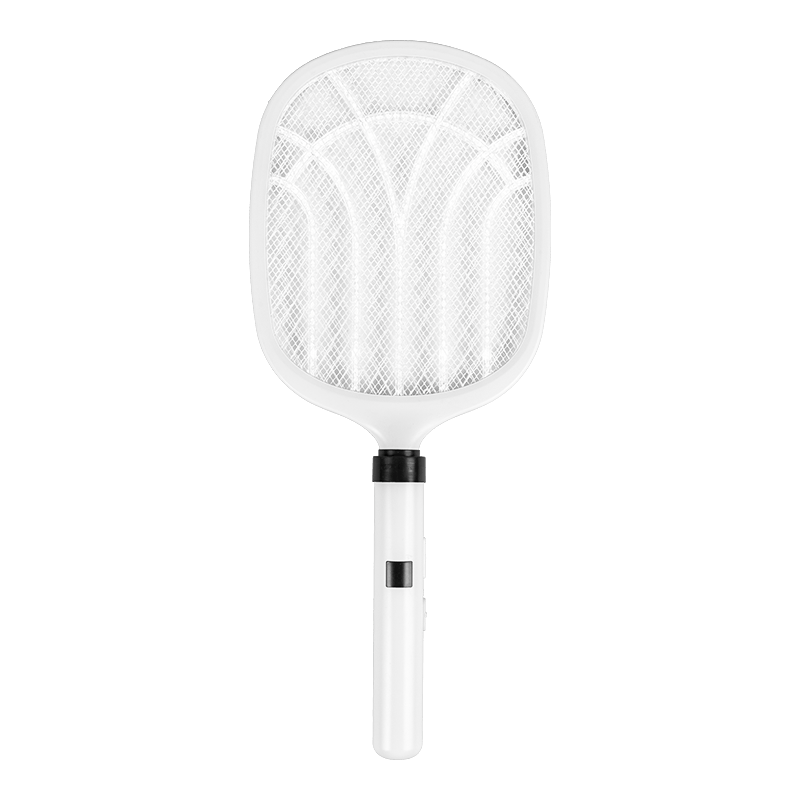 FF-883A 1200mAh Embroidered Pattern Lamp USB Base Lithium Electric Mosquito Swatter
The battery size in an electric fly swatter is not a one-size-fits-all specification. Across current models you will find replaceable AAA c...
READ MOREMosquitoes remain one of the most persistent nuisances in daily life, disrupting sleep, interrupting outdoor gatherings, and in many region...
READ MOREAn electric mosquito swatter is one of the most effective, chemical-free tools for killing mosquitoes and other flying insects on contact. I...
READ MOREElectric mosquito swatters are widely used in homes around the world as a chemical-free way to eliminate mosquitoes and other flying insects...
READ MORE+86-574-62470728
+86-13736064888
No.1, Fuchuan Hill, Zhishan Village, Yangming Subdistrict, Yuyao City, Zhejiang Province, China

Copyright © Zhejiang Yuyao Fenfa Electric Technology Co., Ltd. All Rights Reserved.
 Custom Electric Handheld Bug Zapper Factory
 Previous