EN
EN  English
 中文简体
中文简体 Español
 عربى
عربىNews
Home / News / Industry News / Are Bug Zappers Waterproof? IP Ratings, Rain Safety, and Smart Buying Tips

Content
Every few weeks, a buyer or a first-time visitor asks us the same question: are bug zappers waterproof? The honest answer is that most of them are not. A small group of outdoor models is built to keep rain out, but the word "waterproof" gets used very loosely in this category. A unit that survives a whole summer on an open patio is usually water-resistant, which is a different promise with a very different set of limits.
Below we explain what those limits are, how to read an IP rating without being misled, and how moisture affects handheld electric mosquito swatters in particular. We build these products for a living, so we will also share the small habits that keep a unit working season after season.
Waterproof means water cannot enter the housing, even under pressure or after being submerged. Water-resistant means the housing can tolerate splashes, humidity and light rain without failing straight away. Almost every insect killer sold for outdoor use belongs to the second group. The housing may be sealed against splashes, the internal electronics may be coated, but the device is still not designed to sit in a puddle or be hosed down.
The distinction matters most because of electricity. A zapper's killing grid runs on high voltage, and the power supply, plug and adapter are usually the first parts to fail after water exposure. Even a splash-proof unit should never be connected with wet hands or left with a damp cable joint.
We wrote a longer guide on whether it is safe to use an electric mosquito swatter, and the same rules apply here: dry hands, dry socket, dry cable, and no wet fingers near a live grid.
Manufacturers use IP (Ingress Protection) ratings to describe how well a housing keeps out dust and water. The code looks like IP44 or IPX4. The first digit covers solids, the second covers liquids, and an X simply means the solid side was not tested. For outdoor insect killers, the second digit is the one that matters.
| Rating | What it actually means | Realistic placement |
|---|---|---|
| IPX0 | No water protection at all | Sheltered indoor rooms only |
| IPX2 | Dripping water when tilted up to 15 degrees | Covered porch, no driving rain |
| IPX3 | Spraying water up to 60 degrees from vertical | Under an awning or roof overhang |
| IPX4 / IP44 | Splashing water from any direction | Patio edge, splash zone, light rain |
| IPX5 | Water jets from a small nozzle | Exposed wall, but not direct cleaning |
| IPX6 | Powerful jets and heavy rain | Open garden, short-term storms |
| IPX7 | Temporary immersion | Practically unheard of in insect killers |
In practice, IPX4 is the realistic ceiling for most outdoor zappers. If a listing claims "fully waterproof" but shows no IP number anywhere, treat it as splash-resistant at best and keep it under cover.
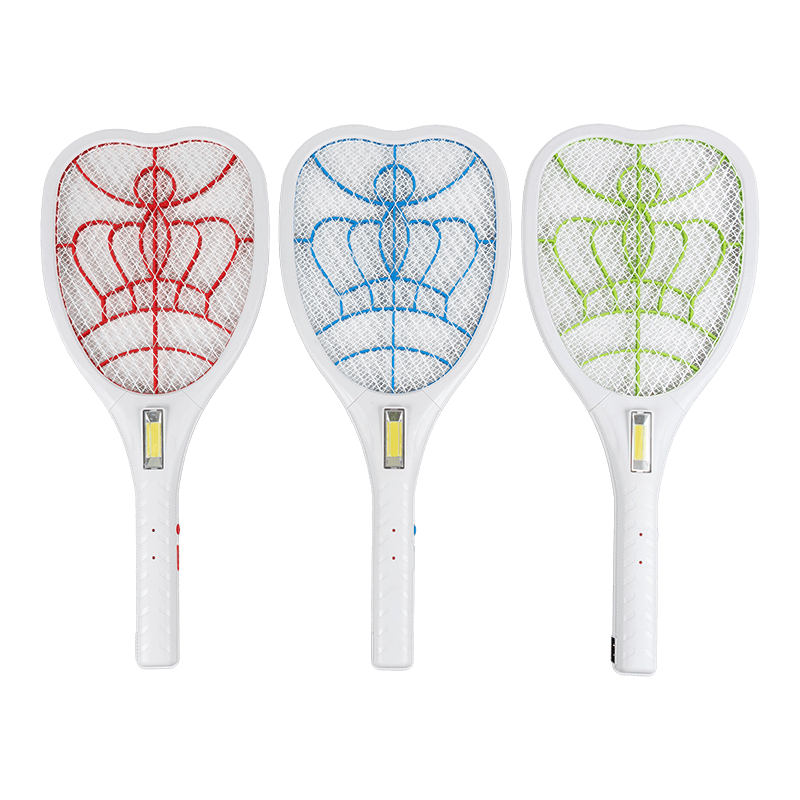
Handheld electric mosquito swatters are not meant to be left outside at all. You hold them, swing them, and put them away. That means rain, garden sprinklers and wet grass are all working against the same weak points: the metal mesh, the high-voltage circuit and the battery.
It also means you should never rinse a swatter under a tap or dunk the mesh to clean it. A dry cloth or a slightly damp one is enough. Water that creeps between the mesh layers can corrode the grid, and moisture inside the handle can shorten the life of the battery and the boost circuit.
Battery choice changes the risk profile too. Models that run on replaceable AAA cells have no charging port to worry about, which makes them a sensible pick for humid workshops, garages or boats where a charging socket would be one more thing to keep dry. Our multifunctional electric mosquito swatters cover the other end of the range, with USB, base and figure-eight charging options plus lithium or lead-acid cells.
 FF008 AAA Battery-Powered Electric Mosquito SwatterA cordless AAA-battery swatter with no charging port or cable, suited to humid spots where avoiding a charging socket matters.View Product →
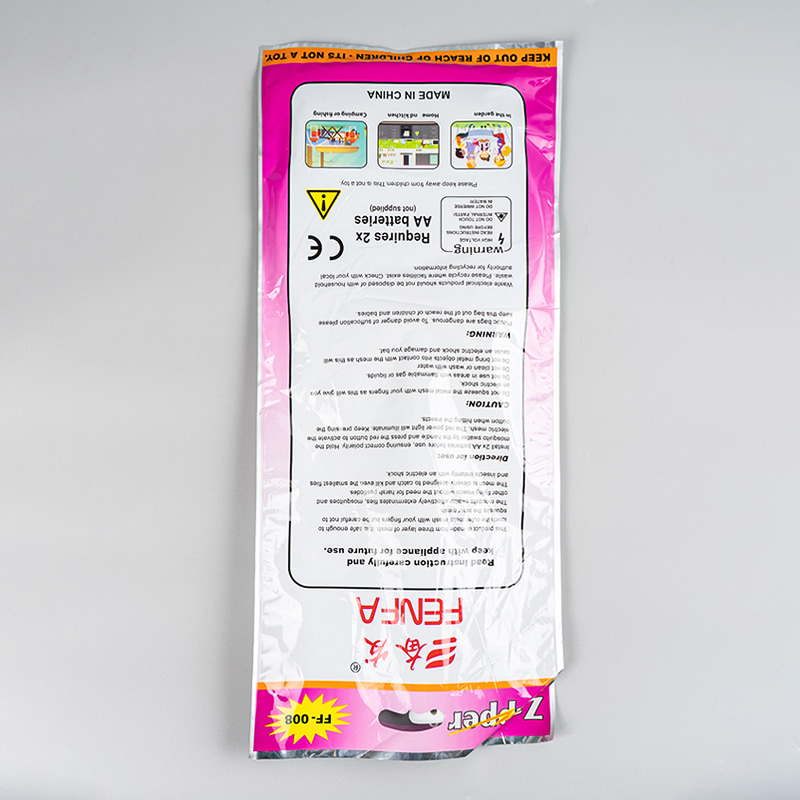
The FF008 is the simplest example in our catalogue: an AAA battery powered swatter with no charging port, no cable and no adapter, so the only moisture you have to think about is what gets on the mesh itself.
Most quality swatters are moulded from ABS or similar impact-resistant plastics. Seams are the weak points, so the better designs keep the handle as a single closed shell and limit openings to the battery door and the charging input.
A rubber cover over a USB socket, a tight battery door and a recessed charging pin all reduce the chance of water reaching live parts. These are simple features, but they are the difference between a swatter that lasts three summers and one that lasts one. Foldable models need extra care because the hinge adds another gap, so they should be dried and stored closed rather than left open in a damp shed.
 FF881 Foldable USB Rechargeable Swatter with DisplayA foldable USB-rechargeable swatter with a battery display, but its hinge and USB port need drying and indoor charging to avoid moisture.View Product →
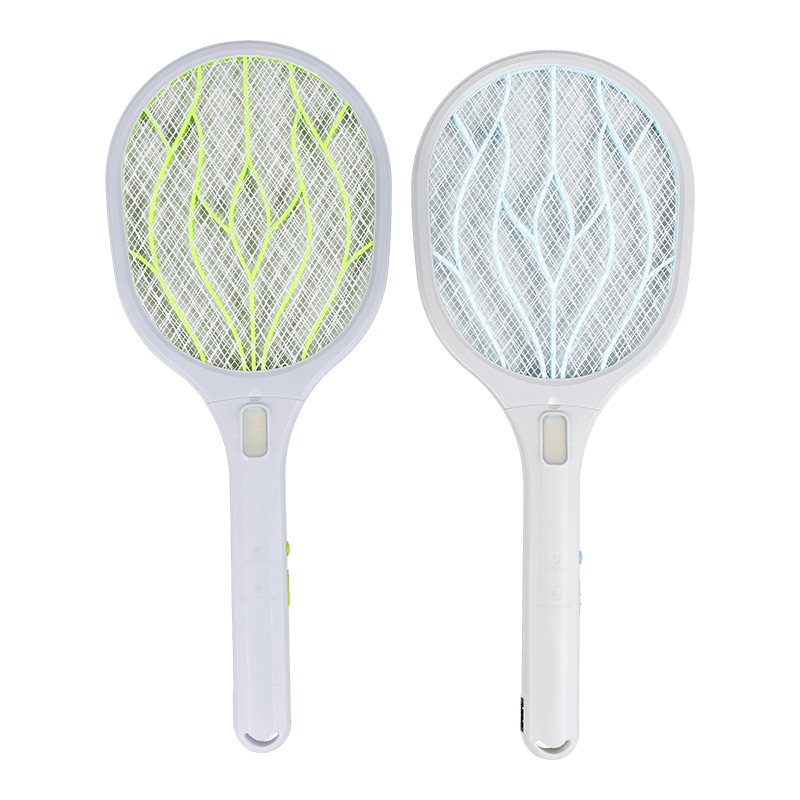
Take the FF881, a foldable USB rechargeable swatter with a display screen. The folding joint and the USB port are exactly the two places where moisture finds a way in, which is why we suggest charging it indoors and wiping the hinge dry before it goes back in the drawer.
Lead-acid and lithium cells both dislike long-term humidity. Storing a swatter in a damp utility room or on a wet windowsill will shorten cell life long before the electronics give up. A dry cupboard at room temperature is the best home for it during the off-season.
If you live somewhere humid, or your swatter spends its time on a balcony or near a pool, these habits make a measurable difference:
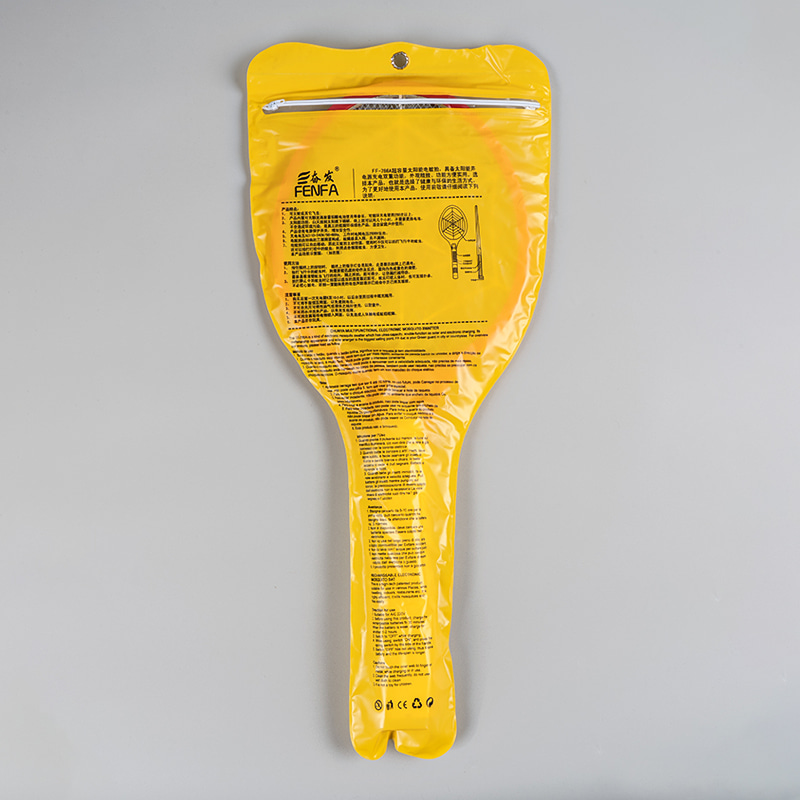 FF786A 3-Color Solar Electric Mosquito Swatter with PlugA solar and plug-in swatter with three-colour LEDs and a 400mAh lead-acid cell, best kept under cover where the panel can still get light.View Product →
The FF786a is a good illustration: a three-colour solar model with a lead-acid 400mAh cell and a plug. The panel wants light, but the body still wants shelter, so a covered balcony is a better home for it than an open lawn.
Only if it carries an IPX4 rating or better and sits under some form of cover. Even then, bring the adapter and cable indoors. Those two parts are rarely rated for outdoor use.
Not necessarily. A splash-resistant unit that dries out properly usually keeps working. The damage tends to appear weeks later as corrosion on the grid or a battery that no longer holds a charge.
Keep it at least a few metres from the water and never handle it with wet hands. Splash and chlorinated air are both harder on electronics than plain rain.
No. Handheld swatters should stay dry everywhere. In steamy rooms, keep the unit away from the sink and let it air out before storing.
Zhejiang Yuyao Fenfa Electric Technology Co., Ltd. has been making electric mosquito swatters and portable fan heaters in Yuyao, Ningbo since 2016. Because so many of our orders ship to coastal, tropical and rainy regions, humidity resistance is a practical design question rather than a marketing slogan. Our housings, ports and battery compartments are chosen with that in mind, and our products carry CE certification alongside an ISO 9001 quality management system.
We work with importers, brands and trading companies on custom and OEM orders, which means we are often asked to adjust a sealing detail, change a charging port or move a battery type for a specific market. If you are sourcing a swatter for a humid climate, that conversation is worth having early, before tooling and packaging are fixed.
Assume a bug zapper is water-resistant, not waterproof, until the label proves otherwise with a real IP rating. Keep the plug, cable and adapter dry no matter what the box says. For handheld swatters, treat moisture as the main enemy of a long life: wipe, dry, store indoors, and never rinse the mesh.
Get those three habits right and a well-made swatter will handle the damp season just fine, without any waterproof claims needed.
Short answer: yes, you can use a bug zapper inside — as long as the unit is built for indoor use and you keep the electrified grid out of r...
READ MOREWhen you press the button on an electric fly swatter, the metal grid delivers a high-voltage pulse that stuns or kills mosquitoes, flies, a...
READ MOREFew things disrupt a peaceful evening faster than a mosquito buzzing past your ear. Traditional swatters leave smudges on walls and plenty ...
READ MOREMosquitoes remain one of the most persistent nuisances in daily life, disrupting sleep, interrupting outdoor gatherings, and in many region...
READ MORE+86-574-62470728
+86-13736064888
No.1, Fuchuan Hill, Zhishan Village, Yangming Subdistrict, Yuyao City, Zhejiang Province, China

Copyright © Zhejiang Yuyao Fenfa Electric Technology Co., Ltd. All Rights Reserved.
 Custom Electric Handheld Bug Zapper Factory
 Previous