 EN
EN  English
 中文简体
中文简体 Español
 عربى
عربىThe Chemical Hazard Problem That Has Been Normalized
For decades, aerosol insecticides, plug-in vaporizers, and topical repellents containing DEET, permethrin, pyrethroids, and organophosphates have dominated the mosquito control market. Their effectiveness was never seriously doubted. What was underestimated — or actively minimized — was the cumulative exposure burden these chemical compounds place on household occupants, particularly in enclosed spaces, and on the individuals who apply them most frequently.
Research published across multiple toxicology and environmental health journals in recent years has drawn attention to the neurological, endocrine-disrupting, and respiratory effects associated with prolonged low-level exposure to common insecticide active ingredients. Children and pregnant women represent the highest-risk populations, yet these are precisely the groups most likely to inhabit environments where mosquito chemical control is applied regularly throughout summer months.
Documented Concerns Associated with Chemical Mosquito Products
- DEET at high concentrations has been associated with neurotoxic effects in animal models and adverse skin and neurological reactions in sensitive individuals.
- Pyrethroid-based products have demonstrated endocrine-disrupting properties in laboratory studies and aquatic ecosystem toxicity following runoff.
- Plug-in vaporizers and heated mat repellents release volatile organic compounds into enclosed living spaces, accumulating in poorly ventilated rooms.
- Chemical residues on skin, bedding, and indoor surfaces persist well beyond the active repellency period, extending unnecessary exposure.
- Repeated application of insecticide products has been linked to resistance development in mosquito populations, reducing long-term effectiveness while increasing usage.
The practical consequence of this evidence base is not panic but recalibration. Families seeking to protect themselves from mosquito-borne illness — which remains a genuine public health priority — need solutions that do not introduce a secondary chemical hazard into the environments they are trying to make safe. Physical mosquito control methods, and the electric mosquito swatter in particular, address precisely this gap.
What Physical Mosquito Control Actually Means
Physical mosquito control refers to any method that reduces mosquito populations or prevents mosquito bites through mechanical, electrical, or barrier means rather than through the introduction of toxic compounds. The category is broader than many consumers realize and encompasses a layered approach that, when implemented comprehensively, rivals chemical methods in effectiveness while eliminating chemical exposure entirely.
Tightly woven window screens, door mesh systems, and mosquito nets over sleeping areas physically prevent access without any chemical component.
Eliminating standing water breeding sites removes the generational supply of mosquitoes before they reach biting age, addressing the problem at its origin.
Ultraviolet light attractors lure mosquitoes and other flying insects away from human activity zones, capturing or killing them without chemical emissions.
Handheld racket-style devices deliver a high-voltage, low-current shock that instantly eliminates mosquitoes on contact through pure electrical energy.
The strength of physical mosquito control lies in its combinability. No single method covers every scenario, but layers of physical protection applied together — screens on windows, nets over beds, source reduction in the yard, and an electric swatter for active elimination — create overlapping zones of defense that comprehensively address the mosquito threat without a single milligram of chemical input.
The Electric Mosquito Swatter: Mechanism and Effectiveness
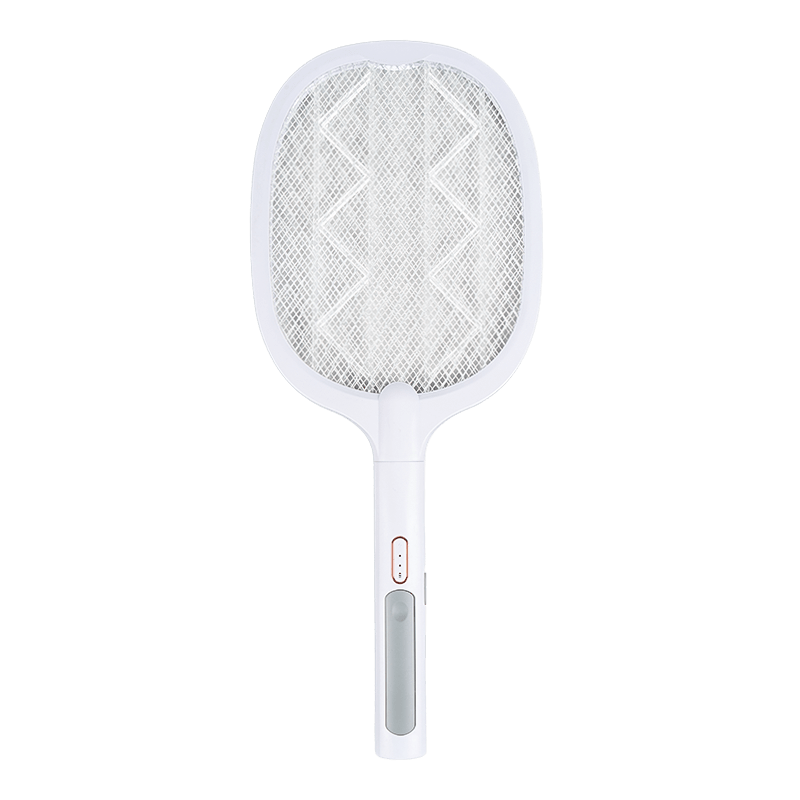
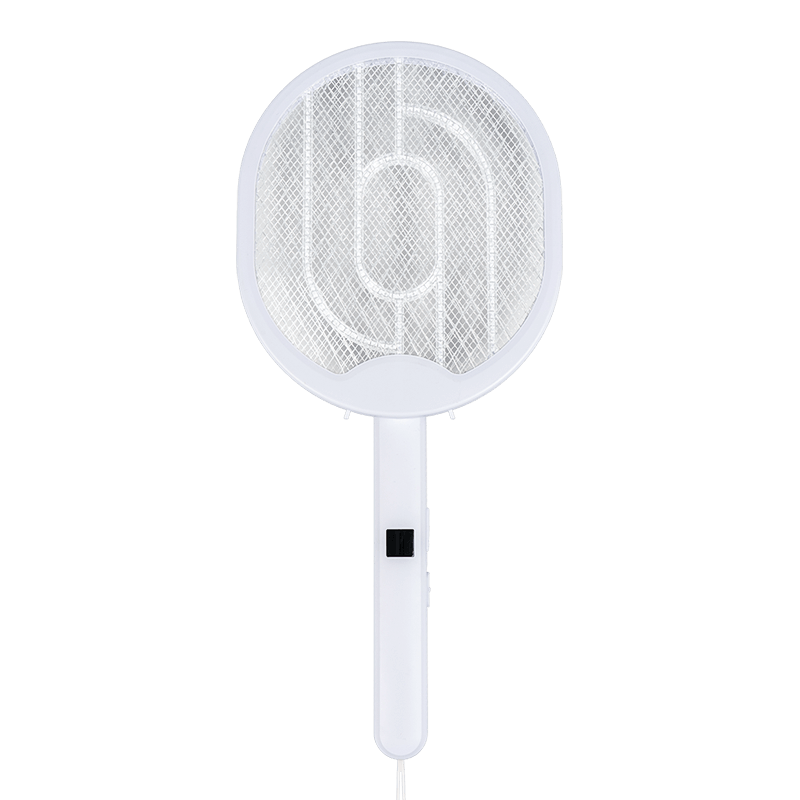
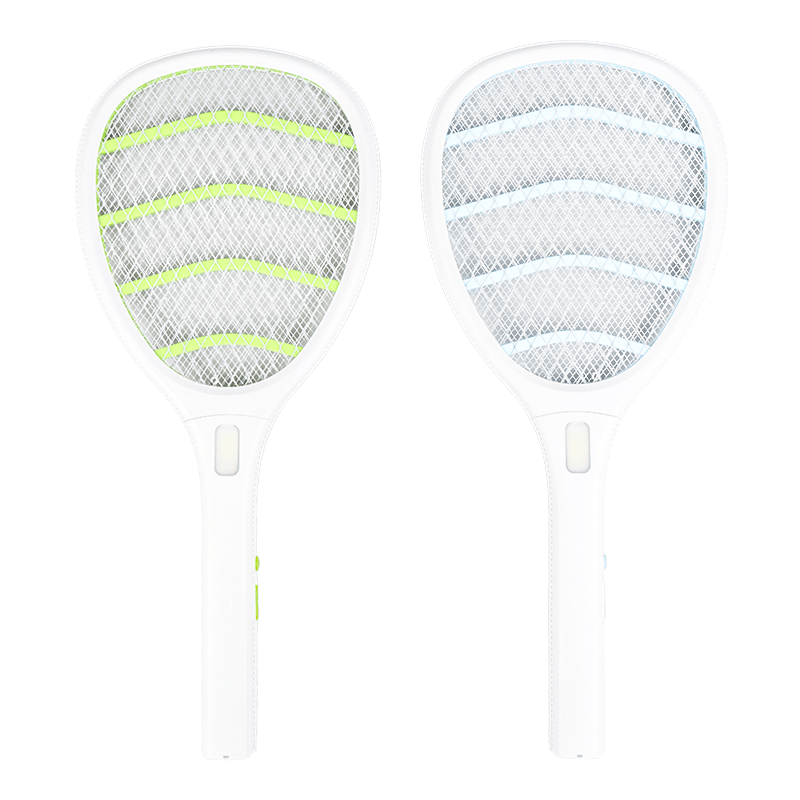
The electric mosquito swatter, colloquially known as the bug zapper racket, operates on a straightforward principle. A battery-powered circuit charges a mesh grid to a high voltage — typically between 500 and 3,000 volts depending on model — at extremely low amperage. When a mosquito or other small flying insect contacts the charged grid, the electrical discharge kills it instantly through the disruption of cellular function. The sound is audible, the result is immediate, and no chemical residue of any kind is produced.
Modern premium models have refined this basic mechanism considerably. Variable voltage settings allow adjustment for mosquito sensitivity versus larger insects. LED UV attractant lights integrated into the swatter head draw mosquitoes toward the device actively rather than requiring the user to chase each insect. Rechargeable lithium battery systems eliminate disposable battery waste. And critically, the safety architecture surrounding the lethal inner grid has evolved substantially, culminating in what the market now describes as the three-layer safety net.
Why Voltage Without Safety Architecture Is Insufficient
Early electric mosquito swatters were effective at eliminating insects but presented a meaningful risk of accidental human contact with the charged inner grid. A child's finger inserted through a simple single-layer mesh, or an adult's hand slipping during a swatting motion, could make contact with the live wire grid and receive a painful, if rarely dangerous, shock. For households with young children, or for users in camping environments where distracted handling is common, this represented a legitimate barrier to safe adoption.
The Three-Layer Safety Net: Engineering Safety Without Sacrificing Effectiveness
The three-layer safety net design represents the most significant engineering advance in electric mosquito swatter development. It addresses the human contact risk directly through a physical architecture that maintains full lethality against mosquitoes while making accidental human contact with the charged grid geometrically improbable.
Three-Layer Safety Net Architecture — How It Works
Outer Protective Mesh — A wide-gauge outer layer with spacing sufficient for mosquitoes to pass through easily but structured to prevent fingers or large objects from reaching the inner layers. This is the first barrier against accidental human contact.
High-Voltage Killing Grid — The active electrical element, positioned between the two protective mesh layers. Mosquitoes that pass through the outer layer contact this grid and are eliminated. Its central position ensures it cannot be reached directly from outside without penetrating both adjacent layers simultaneously.
Inner Safety Barrier — A fine inner mesh that provides an additional physical separation from the killing grid on the interior face of the device. This layer is particularly relevant for preventing contact if the device is set down face-inward or placed in a bag alongside other items.
The practical result of this architecture is a device that a child cannot be accidentally shocked by through ordinary handling — touching the face of the swatter — while remaining fully lethal to mosquitoes whose body dimensions allow them to bridge across the safety layers to contact the inner grid. This dimensional selectivity is the elegance of the design: it exploits the physical difference in size between a mosquito and a human finger without requiring any active sensor or detection system.
The three-layer safety net effectively solves the central paradox of any contact-kill device: how to be simultaneously dangerous to the target and safe for the user. The answer is geometry, not chemistry, and it works reliably without any maintenance requirement. Product safety analysis, Consumer Electronics Safety Review, 2025
Comparing Physical and Chemical Mosquito Control Methods
| Criteria | Electric Swatter (3-Layer) | Chemical Sprays | Plug-In Vaporizers |
|---|---|---|---|
| Chemical exposure risk | None | High (direct and residual) | Moderate (continuous VOC release) |
| Safe for children and pregnant users | Yes, with three-layer design | Restricted use advised | Not recommended in sleeping rooms |
| Effectiveness speed | Instant on contact | Fast (minutes) | Gradual (30-60 min) |
| Outdoor and camping use | Excellent, portable | Moderate (wind-dependent) | Requires power source |
| Long-term running cost | Low (recharge only) | Ongoing product purchase | Ongoing refill purchase |
| Environmental impact | Minimal | Significant (soil, water) | Indoor air quality |
| Resistance development | Not possible | Well-documented concern | Documented in some species |
Ideal Applications: Healthy Homes and Camping Environments
The Healthy Home Context
Within the domestic environment, the three-layer safety net electric swatter occupies a role that no chemical product can fill equivalently: active, on-demand mosquito elimination that can be safely performed in a room occupied by sleeping children, elderly family members, or individuals with respiratory sensitivities. The moment a mosquito is detected, the swatter can be activated and used without ventilating the room, without waiting periods, and without any residue concern.
For households that have already committed to reducing chemical load — choosing fragrance-free cleaning products, filtering drinking water, sourcing organic produce — the electric swatter is the logically consistent mosquito control choice. It completes a chemical-free household philosophy that would otherwise have an awkward gap during mosquito season.
The Camping and Outdoor Context
Camping environments present unique mosquito control challenges that chemical products handle poorly. Wind disperses sprays before they can be effective. Open environments mean chemical concentrations never build to the levels possible indoors. And the proximity of water sources — precisely the environments most valued for camping — creates genuine concern about chemical runoff into ecosystems that may be protected or environmentally sensitive.
The electric mosquito swatter, by contrast, performs identically in outdoor conditions. Wind has no effect on its mechanism. Distance from water sources is irrelevant. Its portability — a fully charged premium model operates for six to eight hours on a single charge — means it can accompany hikers to remote sites where neither electricity nor resupply of chemical products is available. The swatter functions in rain-sheltered environments such as tent interiors and tarp shelters without any modification.
Recommended Physical Mosquito Control Strategy for Camping
- Select campsites away from standing water where possible to minimize ambient mosquito density from nearby breeding populations.
- Use a properly fitted mosquito net over sleeping areas inside tents, secured at the base to prevent entry during the night.
- Keep tent doors closed at dawn and dusk, the peak mosquito activity periods in most geographic regions.
- Use the electric swatter to clear mosquitoes from the tent interior before sealing it for the night, systematically working from front to back.
- For campfire and social areas, use a portable UV attractant trap placed upwind of the group to draw mosquitoes away from occupants.
- Wear long sleeves and light-colored clothing during peak activity periods as a primary barrier layer that requires no chemical application.
Selecting the Right Electric Swatter for Household and Camping Use
The market for electric mosquito swatters has matured significantly, and meaningful quality differences exist between products. The three-layer safety net feature should be treated as a non-negotiable baseline for any household with children. Beyond this, the most useful evaluation criteria include charge retention, voltage range, weight, and weather resistance.
A voltage range of 1,500 to 2,500 volts covers the full spectrum of mosquito elimination to larger flying insects without exceeding thresholds that create meaningful shock risk to humans even in the unlikely event of outer-mesh contact. Lithium-ion rechargeable models with USB-C charging have become the standard for quality products and eliminate the ongoing cost and waste of disposable batteries. Weight under 250 grams allows extended use without fatigue, which matters for thorough tent-clearing sessions. For camping use specifically, a water-resistant or waterproof rating protects the device from humid conditions and light rain.
Maintenance and Longevity
Physical mosquito control devices require minimal maintenance compared to the continuous repurchasing cycle of chemical products. The primary maintenance task for electric swatters is periodic cleaning of the grid and mesh layers, typically accomplished with the included brush accessory and performed after each use or weekly during high-use periods. This removes insect debris that can reduce grid efficiency and prevents buildup that might affect the device's electrical performance over time. Stored in a dry environment between seasons, a quality three-layer safety net swatter has a functional lifespan measured in years rather than the single season typical of chemical repellent supplies.
The Broader Argument for Physical Mosquito Control
The case for rejecting chemical mosquito control in favor of physical alternatives is ultimately an argument about the kind of environment we choose to maintain for ourselves and our families. Chemical control offers convenience purchased at the cost of continuous low-level toxicant exposure — an exchange that was once invisible but is increasingly difficult to justify given the availability of physical alternatives that are equally effective in the scenarios where people actually need mosquito protection.
Physical mosquito control does not demand sacrifice. It does not mean accepting more mosquito bites, enduring more restless nights, or abandoning camping trips to biting conditions. What it means is replacing a chemical burden with an engineered solution — the three-layer safety net electric swatter — that achieves the same protective outcome through electricity, geometry, and design rather than through toxicology.
For the healthy home and for the campsite under a canopy of stars, this is not merely the safer choice. It is the smarter one: durable, cost-effective, chemically inert, and available in a form factor so well-designed that it can be handed to a careful child without the anxiety that accompanies any interaction with chemical insecticide products. The technology exists. The design problem has been solved. The three-layer safety net electric mosquito swatter is, by every meaningful measure, the top choice for those who want effective protection without the chemical cost.
 Previous