 EN
EN  English
 中文简体
中文简体 Español
 عربى
عربىNews
Home / News / Industry News / Durable Fly Swatter Guide: What Makes an Electric Racket Last for Years

Content
Most fly swatters do not fail because you missed the fly. They fail because the hinge cracks, the mesh tears where it meets the frame, or the battery stops taking a charge after a few weeks of use. If you have already replaced a supposedly durable fly swatter more than once this season, the problem is rarely your swing. It is a combination of material selection, battery chemistry, and assembly quality, and those three factors decide whether a racket lasts one summer or five.
Durability is not one feature. In a fly swatter it is a set of measurable characteristics that work together. Mechanical durability covers the frame, hinge, and mesh, the parts that absorb impact on every swing. Electrical durability covers the battery, charging circuit, and switch, the parts that decide whether the racket still fires reliably in its second year. Consistency covers the difference between one unit and the next, which matters most when you are buying a batch rather than a single item.
Manufacturers describe durability differently, but the practical test is the same: after several hundred swings and a full season of charging cycles, the racket should still switch on instantly, hold its charge, and show no cracks or loose mesh. If any one of those checks fails, the product has not met a minimum durability standard, no matter what the label claims.
| Dimension | What usually fails | What to look for |
|---|---|---|
| Frame and hinge | Cracks where the handle meets the head | Thick ABS shell with reinforced hinge |
| Mesh grid | Holes and loose edges after repeated impact | Three-layer mesh with welded edges |
| Battery | Capacity drops after one season | 400mAh lead-acid or 500mAh or higher lithium |
| Charging interface | Port loosens and loses contact | USB port with strain relief or base charger |
| Switch | Intermittent trigger contact | Rated tactile switch with two-switch interlock |
These five checkpoints cover most of the failures that appear when an electric mosquito swatter comes back for service. If a racket scores well on all of them, it will feel heavier and better finished in hand, and that is a more reliable signal than any durability claim printed on the box.
A manual swatter is usually a single piece of thin plastic with a stamped mesh head. It costs very little and dies in predictable ways: the neck bends permanently, the mesh splits at the rim, or the handle snaps during a hard swing. Wire-handled versions survive impact better but still deform under repeated use and are uncomfortable for long sessions.
An electric mosquito swatter is a different product. The body has to carry a high-voltage generator, a battery, and a protective grid, so the frame is necessarily thicker and the materials are chosen to handle the weight. In practice, a well-built electric racket absorbs impact better than most manual swatters because the ABS shell spreads the force instead of flexing a thin plastic neck. The trade-off is that the electrical system adds new failure points. Rechargeable electric swatters fail early when a manufacturer cuts cost on the battery or the charging interface, not because the concept is fragile.
That is why battery chemistry matters more than the brand name. A 250mAh lead-acid racket can stop holding a charge within a year if it is frequently overcharged. A lithium model with a properly matched charging circuit holds voltage more consistently and charges several times faster. If you want a durable fly swatter that you buy once and keep for multiple seasons, start with the power system and work outward from there.
Once the fundamentals are clear, the buying decision comes down to four construction details.
The frame is the first thing to fail on a cheap racket. Look for a molded ABS body with a reinforced hinge between the handle and the mesh head. A hinge that flexes slightly during a swing survives better than a rigid junction because it spreads the impact over a wider area. Cheaper racks use recycled polypropylene, which feels smooth at first but turns brittle after summer heat and repeated cleaning.
The mesh has to do two jobs at once: absorb the physical hit and carry the high-voltage grid. A three-layer mesh is a sensible baseline, with the outer layers acting as live grids and the middle layer acting as a separator. The weak point is where the mesh meets the frame. When the mesh is pressed and welded rather than glued, it stays tight after hundreds of swings. If the mesh loosens, insects slip through the gap between the grid and the rim, and the racket stops being effective even before it visibly breaks.
Battery capacity is the most honest specification on a fly swatter datasheet. Lead-acid units in the 250mAh range are cheap to build, but they have a shorter cycle life and charge slowly. A 400mAh lead-acid battery is a reasonable budget choice, while a USB-rechargeable racket with a 500mAh lithium battery charges faster and keeps its capacity across a full season. The charging port matters just as much. A reinforced USB socket or a charging base will outlast a thin port that wiggles after the cable is pulled at an angle.
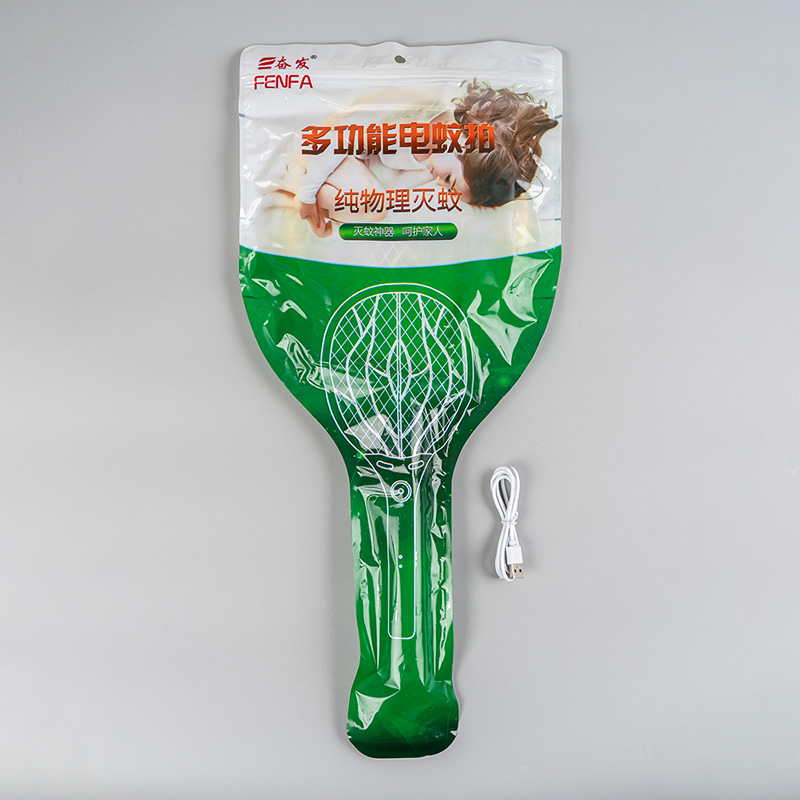 Wholesale FF-003A 500mAh lithium battery electric mosquito swatter with USB cablZhejiang Yuyao Fenfa Electric Technology Co., Ltd. is China wholesale Multifunctional electric mosquito swatter suppliers and factory,Thi...View Product →
The switch is the part you touch most and inspect least. A durable racket uses two switches in series: a sliding on/off switch and a momentary trigger, so the grid cannot energize if someone presses the trigger accidentally. If the trigger feels loose or the travel is short, expect intermittent contact within a few months of daily use.
The evaluation is straightforward once you know what to check. Look at the battery type and capacity, the number of mesh layers, the feel of the switch, and the hinge. In under a minute you can usually tell whether a racket was designed for repeated use or for a single-summer disposal.
A quick rule of thumb helps. If the battery is rechargeable, rated at 500mAh or higher, and the frame is ABS, the racket was built for more than one warm season. Models with genuinely useful extras tend to be made from heavier components because those features require more engineering in the mold. For example, a foldable USB-rechargeable electric mosquito swatter with a charge display lets you check the remaining battery level and uses a hinge designed to move, which removes the most common cause of sudden breakage. The same principle applies to other features: anything that reduces how often you recharge or how hard you swing tends to extend the product's service life.
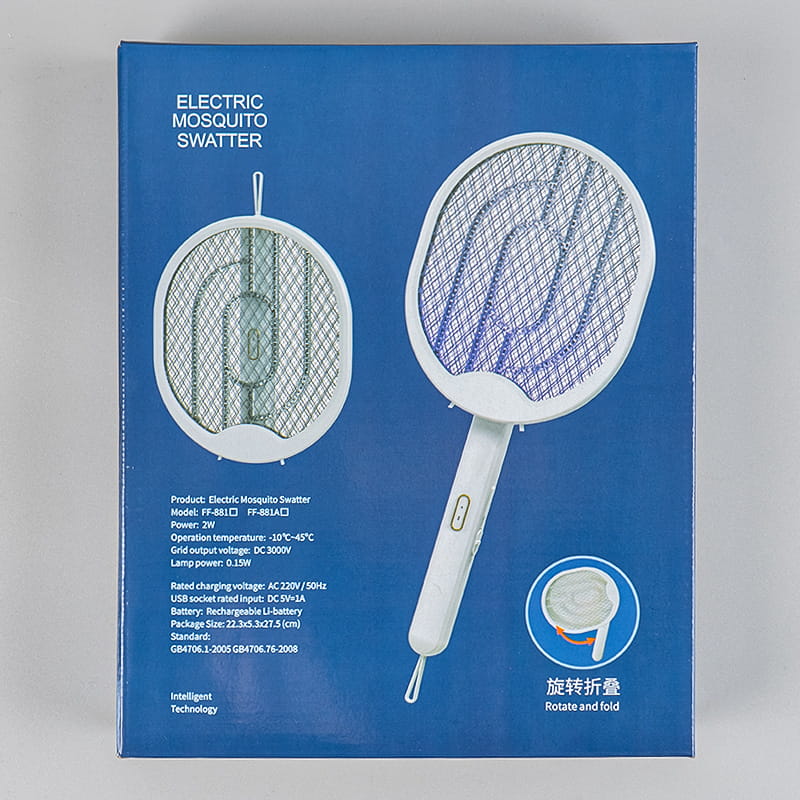 Wholesale FF-881 Foldable USB rechargeable electric mosquito swatter with displaZhejiang Yuyao Fenfa Electric Technology Co., Ltd. is China wholesale Multifunctional electric mosquito swatter suppliers and factory,Fol...View Product →
For larger homes, porches, or anyone who keeps forgetting to charge, capacity is the deciding factor. A 1200mAh lithium rechargeable swatter with an LED light can cover several evenings on a single charge and doubles as a light source, which removes the instinct to swing in the dark and miss altogether.
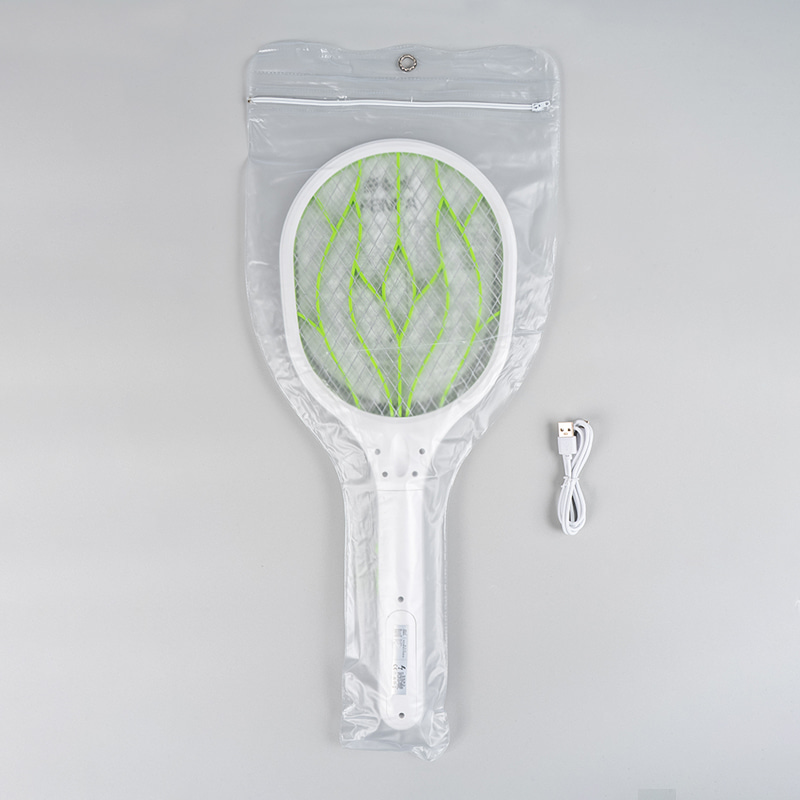 Wholesale FF-988 1200mAh rechargeable lithium battery with LED light multifunctiZhejiang Yuyao Fenfa Electric Technology Co., Ltd. is China wholesale Multifunctional electric mosquito swatter suppliers and factory,The...View Product →
Before settling on a model, run through a short checklist:
If you are an importer, a retailer, or a brand looking for a supplier, the durability conversation shifts from the single unit to the batch. Ask how many charge cycles the battery is rated for, whether the ABS is virgin or recycled material, and how the quality control process verifies the high-voltage mesh before packing. Those answers tell you more than a sample unit that was hand-selected for review.
An OEM manufacturer with a wide product matrix is easier to align with because it is more likely to offer the exact balance of battery, plug standard, and feature set you need. The electric mosquito swatter product lineup shows how the same frame concept can be produced with different capacities and charging methods, which is a practical way to compare options before negotiating a custom order.
Buyers should also confirm that the supplier can document compliance with the destination market's electrical standards. In practice this means plug variants, charging voltage, and certification paperwork, not just a logo on a sample. A manufacturer that already builds multiple charging configurations, including plug-in, USB, base, and regional plug types within one product family, is easier to work with than one that locks you into a single standard.
The after-sales side matters just as much before you sign an order. Replacement mesh, spare batteries, and consistent switch behavior across batches are what determine warranty costs. The difference between a disposable racket and a durable one rarely shows in photos. It shows in the rate of returned units and in whether customers reorder the same model the next season. If you are new to the category, the buying tips for electric mosquito swatters explain how charging methods and usage patterns line up, which is useful background whether you are buying one unit or a full container.
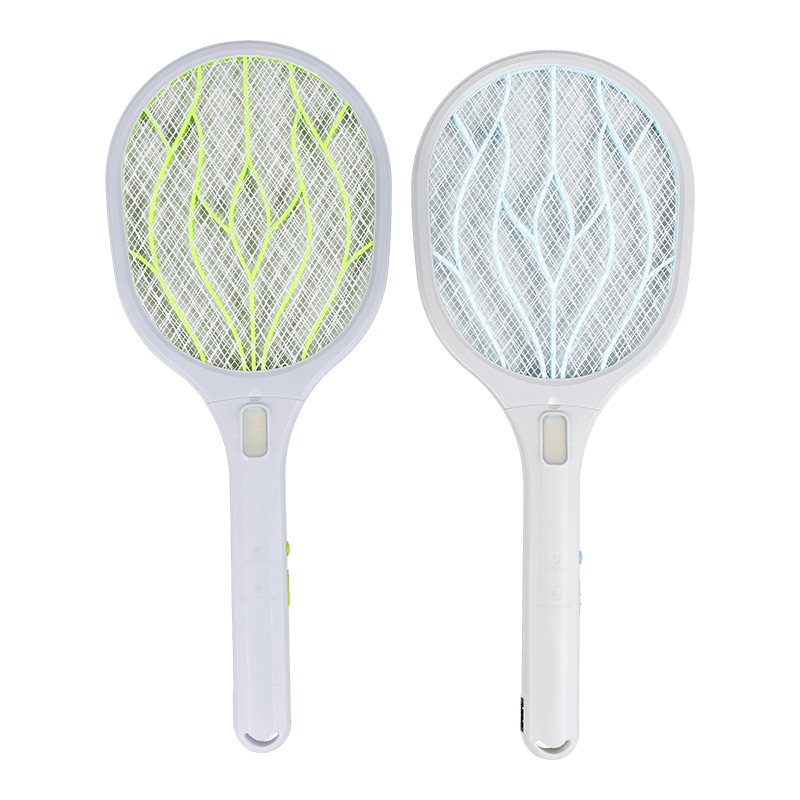 FF-988A 400mAh Portable Electric Mosquito Swatter with Light and Figure-Eight Cord
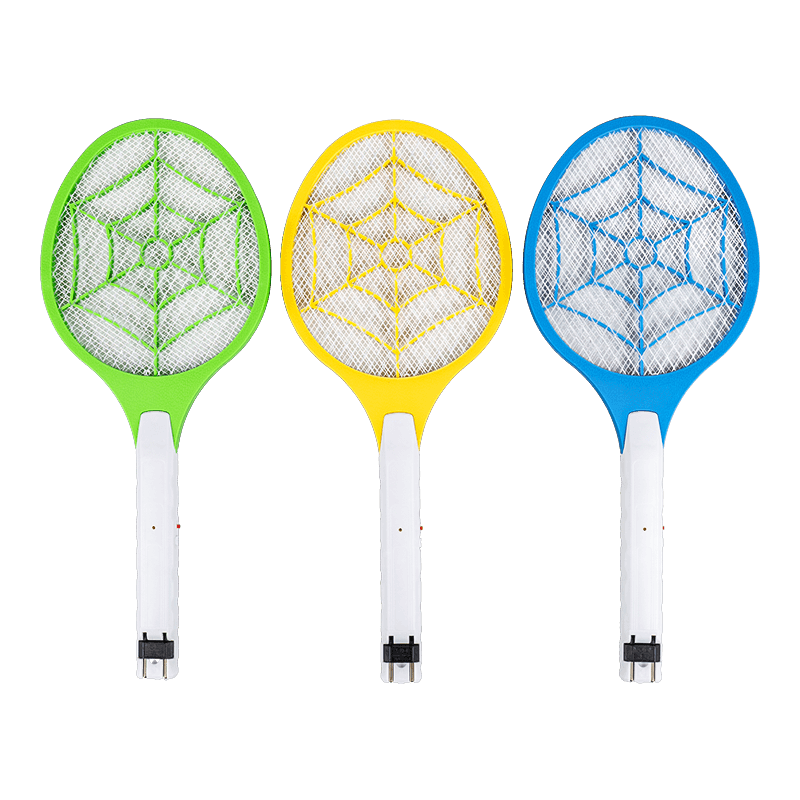 FF-007 3-Color Brazilian Plug Lead-Acid Battery 400mAh Electric Mosquito Swatter
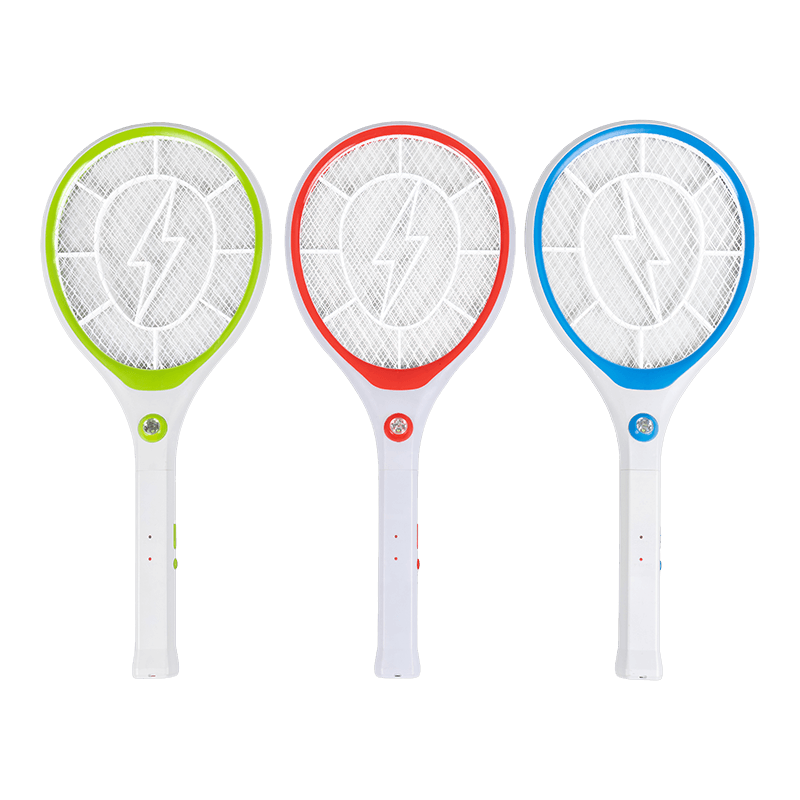 FF-787A 3-Color LED Solar with Plug Lead-Acid Battery 400mAh Electric Mosquito Swatter
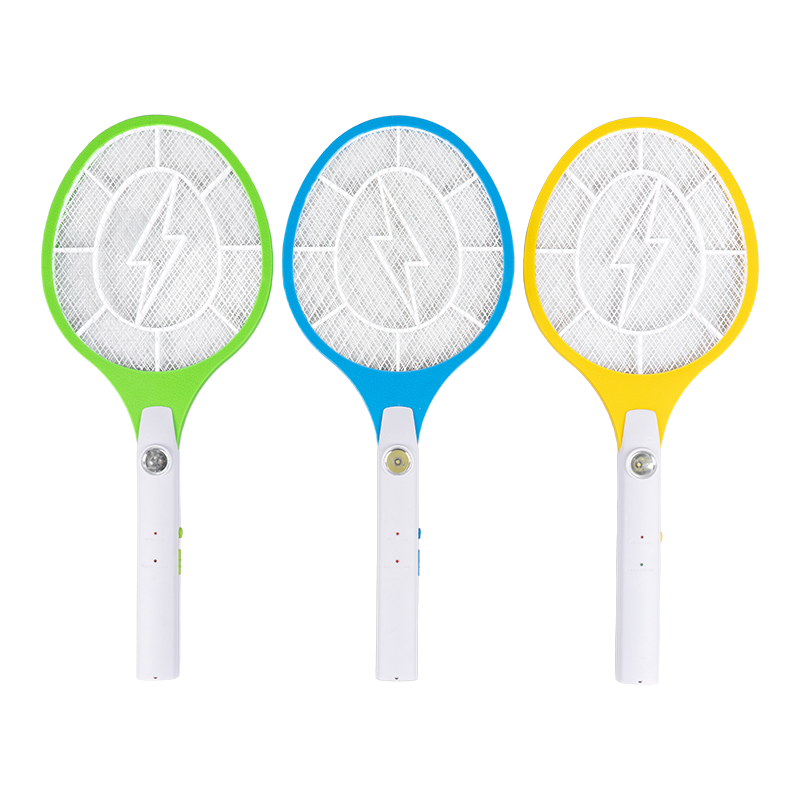 FF-009 LED Lead-Acid Battery 400mAh with Plug Electric Mosquito Swatter
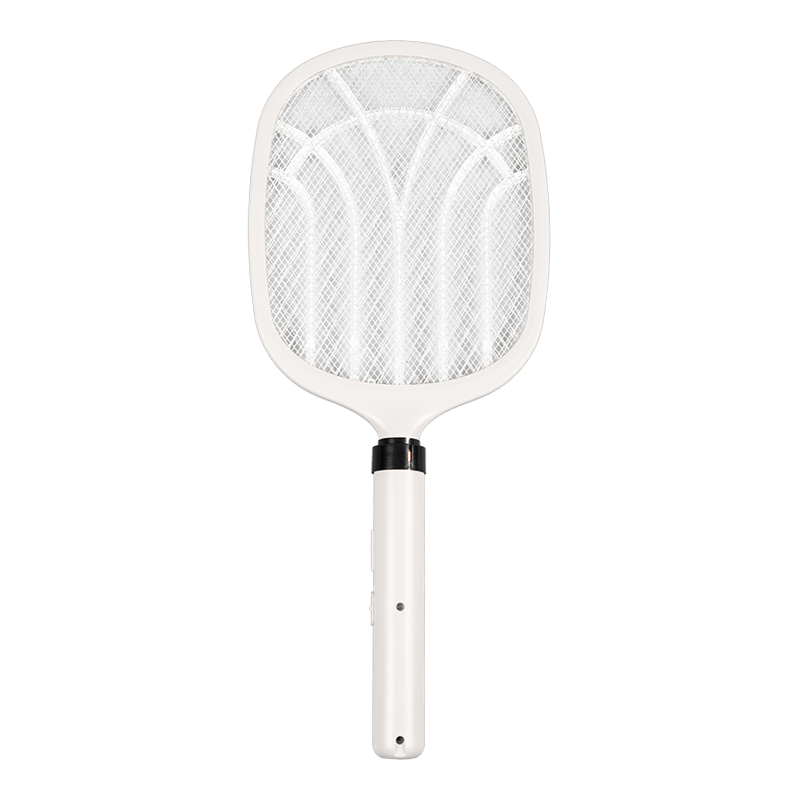 FF-883 1200mAh Embroidered Pattern Lamp USB Base Rechargeable Electric Mosquito Swatter
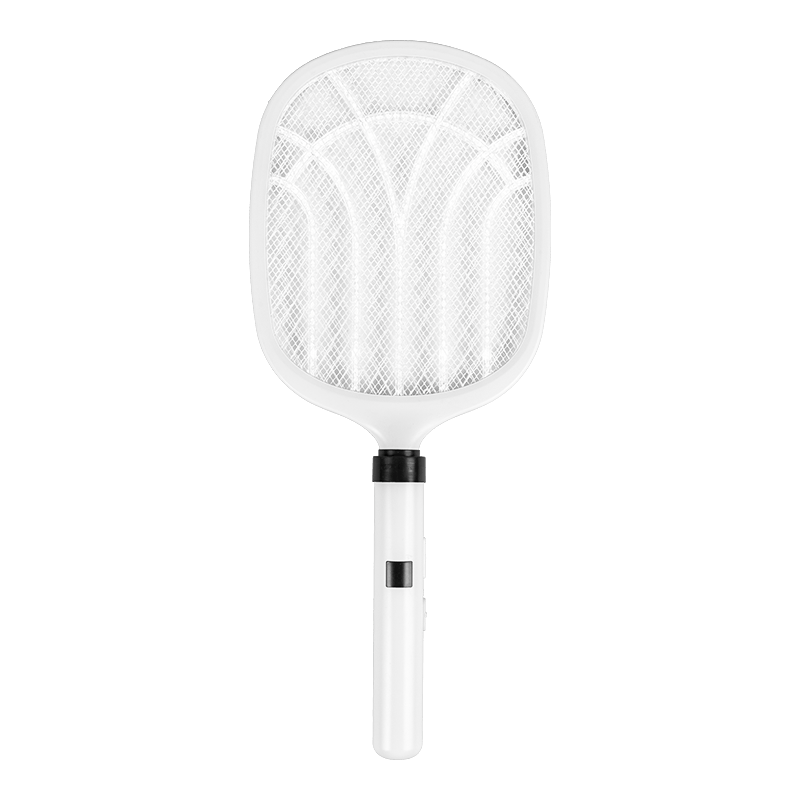 FF-883A 1200mAh Embroidered Pattern Lamp USB Base Lithium Electric Mosquito Swatter
The battery size in an electric fly swatter is not a one-size-fits-all specification. Across current models you will find replaceable AAA c...
READ MOREFew things disrupt a peaceful evening faster than a mosquito buzzing past your ear. Traditional swatters leave smudges on walls and plenty ...
READ MOREElectric Mosquito Swatter: Instant and Efficient Mosquito Control Electric mosquito swatters provide an immediate, chemical-free way to elim...
READ MOREChemical-free mosquito control encompasses the full range of physical, biological, environmental, and technological strategies used to redu...
READ MORE+86-574-62470728
+86-13736064888
No.1, Fuchuan Hill, Zhishan Village, Yangming Subdistrict, Yuyao City, Zhejiang Province, China

Copyright © Zhejiang Yuyao Fenfa Electric Technology Co., Ltd. All Rights Reserved.
 Custom Electric Handheld Bug Zapper Factory
 Previous